 Humboldt & Mommsen




Kundenlogin
Wenn Sie noch kein Kundenkonto haben, können Sie sich hier registrieren. Sollten Sie Ihr Passwort vergessen haben, können Sie hier ein neues Passwort anfordern.
Wenn Sie noch kein Kundenkonto haben, können Sie sich hier registrieren. Sollten Sie Ihr Passwort vergessen haben, können Sie hier ein neues Passwort anfordern.
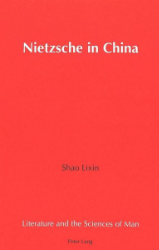
Shao, Lixin
Nietzsche in China
This volume analyzes the chinese responses to Nietzsche, highlights most of them as coded political or social messages, and thus provides a psychological-philosophical analysis of modern chinese intellectuals. Nietzsche has been one of the most influential Western thinkers in twentieth-century China. Many prominent cultural and political figures, such as Liang Qichao, Lu Xun, and Mao Zedong, addressed Nietzsche's philosophy. Chinese interpretations of Nietzsche may sometimes sound outlandish, but they reveal their authors' habits of thinking and innermost concerns. "Nietzsche in China" can be read as an intellectual history of that country. With two or three exceptions, most Chinese figures studied here were drawn to Nietzsche for non-philosophical reasons and had never had a more than superficial knowjedge of him. Their utterances about Nietzsche are not philosophical speculations but coded political or social messages understood only in their particular historical contexts. Nietzsche in China is first of all an intellectual history of twentieth Century China. Some of the most influential scholars, writers, political activists, and theorists in China have been fascinated by the German philosopher. Their responses to him testify to the dramatic transformation of Chinese consciousness during the period. Nietzsche serves as a good pretext for writing the story of this transformation. A modest goal of the book is to delineate the long journey the Chinese have made in learning Western ideas. "Nietzsche in China" is also a psychological-philosophical analysis of modern Chinese intellectuals. Readers will notice that certain chapters pay more attention to the psychological processes behind written words, while others carefully follow philosophical arguments. In all cases every historical flgure is questioned relentlessly about the real motive and meaning of his remarks about Nietzsche. In addition to revealing the main contents of the Chinese consciousness in the twentieth Century, the author tries to bring to light habits of thinking common to many Chinese intellectuals. It is Nietzsche's presence in China that has made such a collective intellectual biography possible. VI,146 Seiten, gebunden (Literature and the Sciences of Man; Vol. 11/Peter Lang Verlag 1999) Mängelexemplar/near mintBestell-Nr.: 13346
ISBN-13: 9780820428536
ISBN-10: 0820428531
Erscheinungsjahr: 1999
ISBN-13: 9780820428536
ISBN-10: 0820428531
Erscheinungsjahr: 1999
Reihe: Literature and the Sciences of Man
Autor*in: Lixin Shao
Sprache: Englisch
Zustand: Wie neu, Mängelexemplar/near mint
Autor*in: Lixin Shao
Sprache: Englisch
Zustand: Wie neu, Mängelexemplar/near mint
Vorheriges Buch Zum Sachgebiet 'Chinesische Kultur' Nächstes Buch
Weitere Bücher im Sachgebiet »Chinesische Kultur«
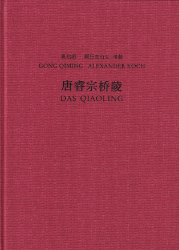
Gong, Qiming/Alexander Koch
Tang-Ruizong-qiaoling/Das Qiaoling
Gong Qiming: Bericht über archäologische Sondagen und Vermessungen am Qiaoling, …
Tang-Ruizong-qiaoling/Das Qiaoling
Gong Qiming: Bericht über archäologische Sondagen und Vermessungen am Qiaoling, …

Siebert, Martina
Pulu
»Abhandlungen und Auflistungen« zu materieller Kultur und Naturkunde im traditionellen …
Pulu
»Abhandlungen und Auflistungen« zu materieller Kultur und Naturkunde im traditionellen …
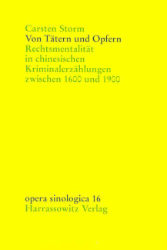
Storm, Carsten
Von Tätern und Opfern
Rechtsmentalität in chinesischen Kriminalerzählungen zwischen 1600 und 1900
Von Tätern und Opfern
Rechtsmentalität in chinesischen Kriminalerzählungen zwischen 1600 und 1900
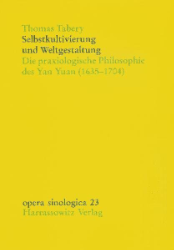
Tabery, Thomas
Selbstkultivierung und Weltgestaltung
Die praxiologische Philosophie des Yan Yuan (1635-1704)
Selbstkultivierung und Weltgestaltung
Die praxiologische Philosophie des Yan Yuan (1635-1704)